
 By
By 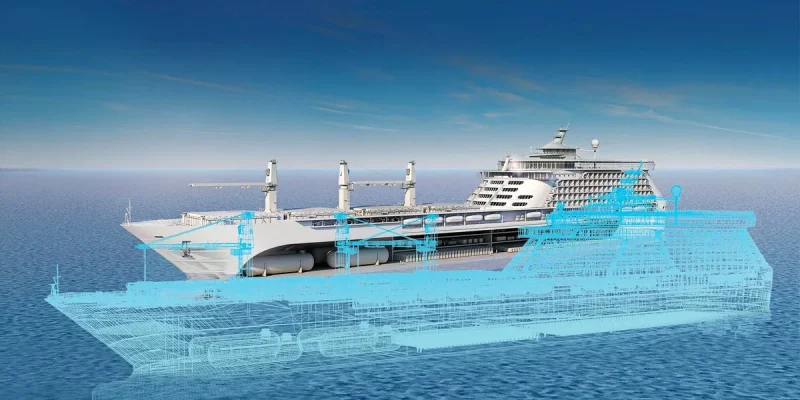
The maritime industry is charting a course through its most significant transformation in a century. Pressured by stringent environmental regulations and the relentless pursuit of operational savings, ship design is no longer just an evolution of previous models. It is a full-blown revolution. The vessels being conceptualized and built today are smarter, cleaner, and more efficient than ever imagined.
This article explores the top ship design trends: from fuel efficiency to digital twin technology. We will navigate through the key innovations that are not just changing the look of ships but fundamentally rewriting how they perform. By understanding these trends, stakeholders can better prepare for the future of global shipping, a future defined by sustainability and data.
Trend 1: The Relentless Pursuit of Fuel Efficiency
Fuel is the single largest operating expense for most vessels, and its combustion is the primary source of the industry’s environmental footprint. Consequently, achieving maximum fuel efficiency is the most dominant trend in modern ship design. This goes far beyond simply choosing an efficient engine; it’s a holistic approach that examines every aspect of the ship’s interaction with its environment.
Advanced Hydrodynamics
The battle against drag is being fought with powerful new weapons. Naval architects use Computational Fluid Dynamics (CFD) to simulate and refine hull forms with incredible precision. This virtual testing allows for the optimization of every curve to minimize resistance.
- Optimized Hull Forms: Instead of one-size-fits-all designs, hulls are now custom-tailored to a ship’s specific operational profile, speed, and route.
- Air Lubrication Systems: This technology pumps a carpet of microbubbles under the hull, creating a layer of air that reduces frictional resistance between the steel and the water. Major container lines have reported fuel savings of 5-10% using these systems.
- Performance Coatings: Modern hull paints go beyond preventing marine growth. Advanced silicone-based coatings create an ultra-smooth, slick surface that barnacles and algae cannot easily adhere to, maintaining low friction for longer periods and reducing the need for frequent cleaning.
Wind-Assisted Propulsion
In a modern twist on an ancient concept, wind is making a major comeback. Rather than traditional sails, today’s ships are being fitted with high-tech wind-assist systems that reduce the load on the main engine.
- Rotor Sails (Flettner Rotors): These large, spinning cylinders use the Magnus effect to generate forward thrust from the wind. They are highly automated and can provide significant propulsion assistance, cutting fuel use by 10-20% on suitable routes.
- Rigid Wing Sails: Large, solid sails that function like an airplane wing are being installed on bulk carriers and tankers. These can be adjusted automatically to capture the optimal wind angle, helping to pull the ship forward.
Trend 2: The Transition to Alternative Fuels
The International Maritime Organization’s (IMO) mandate to drastically cut greenhouse gas emissions has ignited a race to find viable alternatives to heavy fuel oil. Ship design is now centered around fuel flexibility, creating vessels that can adapt to the energy sources of the future.
Liquefied Natural Gas (LNG)
LNG is the most mature alternative fuel currently available. As a bridging fuel, it offers significant environmental benefits, nearly eliminating sulfur oxides (SOx) and particulate matter, while reducing nitrogen oxides (NOx) by up to 80% and CO2 by about 25%. Newbuilds for container ships, cruise liners, and tankers are frequently designed with dual-fuel engines that can run on both LNG and conventional fuel.
Future Fuels: Methanol and Ammonia
Looking toward a zero-carbon future, green methanol and ammonia are emerging as the leading long-term candidates. Produced using renewable energy, these fuels release little to no CO2 when burned. While challenges related to their toxicity, storage, and production infrastructure exist, major engine manufacturers are already developing engines capable of running on them. The latest ship designs often include provisions to be “ammonia-ready” or “methanol-ready,” allowing for easier retrofits in the future.
Trend 3: Digital Twin Technology and the Smart Ship
Perhaps the most transformative of the top ship design trends, from fuel efficiency to digital twin technology, is the creation of the “smart ship.” This involves embedding vessels with sensors and connecting them to shore-based control centers, turning the ship into a floating data hub.
What is a Digital Twin?
A digital twin is a virtual, dynamic replica of a physical ship. This is not just a static 3D model; it is a living simulation that is continuously updated with real-time data from thousands of sensors on the actual vessel. These sensors monitor everything from engine vibrations and fuel flow to hull stress and weather conditions.
The Power of the Twin
This technology revolutionizes ship management in several ways:
- Predictive Maintenance: By analyzing data streams, the digital twin can predict when a component is likely to fail, long before it actually breaks. This allows for maintenance to be scheduled during planned port stays, dramatically reducing costly unplanned downtime at sea.
- Performance Optimization: Engineers on shore can use the digital twin to simulate different scenarios. For example, they can test how a change in trim or speed will affect fuel consumption on a specific voyage, allowing them to provide the crew with the most efficient operational guidance.
- Lifecycle Management: The digital twin maintains a complete record of the ship’s history, from construction to every maintenance action performed. This creates a “digital thread” that improves safety, ensures regulatory compliance, and increases the vessel’s resale value.
Trend 4: Increased Automation and Remote Operations
While fully autonomous cargo ships are still on the horizon, the level of automation on board is increasing rapidly. This trend is about augmenting the human crew, not replacing them. Automated systems can handle repetitive tasks, reduce the risk of human error, and allow seafarers to focus on more complex decision-making.
Key areas of automation include:
- Automated Navigation and Docking: Advanced systems assist with route planning and maneuvering in congested waters, enhancing safety.
- Remote Machinery Monitoring: Technical superintendents can monitor and troubleshoot engine room equipment from their office thousands of miles away, providing expert support to the onboard crew.
- Integrated Control Systems: The bridge of a modern ship is starting to look more like an airplane cockpit, with integrated systems that provide a holistic view of the vessel’s navigation, machinery, and safety status on a single interface.
Frequently Asked questions (FAQs)
Q1: What is the single biggest trend in ship design right now?
The most dominant trend is the dual push for sustainability and efficiency. This is driven by strict IMO emissions regulations and high fuel costs. It influences every design choice, from the shape of the hull to the type of fuel the ship burns and the software it uses.
Q2: Is digital twin technology only for new ships?
While it is easiest to implement during the design of a new vessel, existing ships can be retrofitted with sensors and connectivity systems to create a digital twin. This allows older assets to benefit from predictive maintenance and performance optimization.
Q3: Are alternative fuels like ammonia and methanol safe to use on ships?
These fuels present unique safety challenges compared to traditional oil. Methanol is flammable, and ammonia is toxic. However, engine manufacturers and naval architects are developing robust safety protocols, new tank designs, and specialized handling procedures to manage these risks effectively.
Q4: Will ships become fully autonomous and eliminate the need for crews?
In the near term, no. The trend is toward increased automation to support the crew, not replace them. Fully unmanned vessels face significant regulatory, legal, and technological hurdles. The immediate future is a “human-in-the-loop” model, where technology handles routine tasks and humans manage exceptions and emergencies.
Q5: How do these design trends affect the cost of building a ship?
Incorporating advanced technologies like LNG propulsion, rotor sails, or digital twin systems increases the initial building cost (CAPEX) of a vessel. However, these investments are designed to significantly lower the operational costs (OPEX) over the ship’s 25-year lifespan through fuel savings, reduced maintenance, and improved efficiency.
Final Words
The world of naval architecture is more dynamic today than ever before. The forces of decarbonization and digitalization are converging, creating a new paradigm for vessel design. Understanding the top ship design trends, from fuel efficiency to digital twin technology, is essential for anyone involved in the maritime industry.
These innovations are not isolated improvements; they are interconnected elements of a holistic system. A fuel-efficient hull works best when powered by a clean fuel and managed by a smart, data-driven operational platform. The companies that successfully integrate these trends will not only comply with future regulations but will also gain a decisive competitive advantage. The ship of the future will be cleaner, smarter, and more profitable, and its foundation is being laid on the design tables of today.








Comments